Limbah HorisontalPengering Paddle Blade Hollow Menghemat Energi
Deskripsi produk:
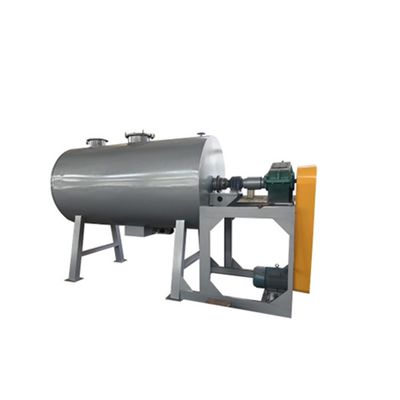
Pengering dayung adalah pengering agitasi berkecepatan rendah yang menggunakan dayung pengaduk internal untuk memastikan bahan basah bersentuhan penuh dengan pembawa panas dan permukaan yang dipanaskan,sehingga mencapai tujuan pengeringanPaddle dryer biasanya tipe horizontal, dual-shaft, atau quad-shaft.
Pengantar Produk
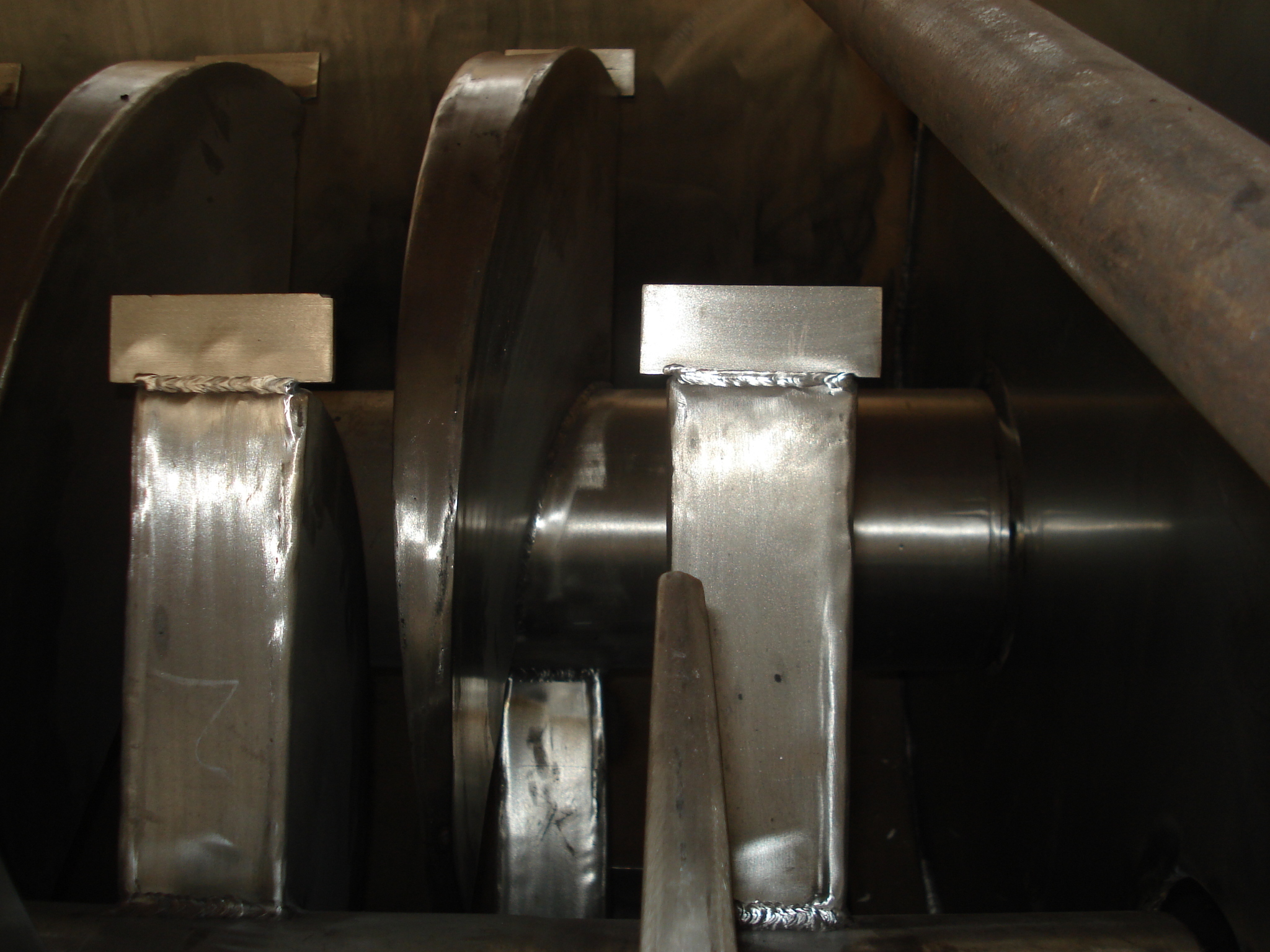
Produk pengering dayung ini dapat secara tidak langsung memanaskan atau mendinginkan pasta, granular, bubuk, dan bahan bubur, dan dapat menyelesaikan operasi unit seperti pengeringan, pendinginan, pemanasan, sterilisasi, reaksi,dan pembakaran suhu rendah. pisau transfer panas khusus yang berbentuk irisan dalam peralatan memiliki efisiensi transfer panas yang tinggi dan fungsi pembersihan diri untuk permukaan transfer panas.
Prinsip Kerja
Blades berukuran sekrup yang tersusun rapat berjalan di sepanjang poros berongga, yang mengalirkan media transfer panas.dan suhu medium transfer panas berkisar dari -40°C hingga 320°C. Ini bisa menjadi uap atau cairan seperti air panas atau minyak termal. pemanasan konduksi tidak langsung digunakan, menghilangkan risiko kehilangan panas melalui udara; semua panas digunakan untuk memanaskan bahan.Kerugian panas terbatas pada disipasi panas ke lingkungan melalui lapisan isolasi unit. permukaan transfer panas bilah berbentuk tumpang tindih memiliki fungsi pembersih diri. Gerakan relatif partikel material dengan permukaan berbentuk tumpang tindih menciptakan efek mencuci,Menghilangkan bahan yang melekat dan menjaga permukaan transfer panas yang bersih selama operasiCangkang pengering bilah berbentuk Ω, biasanya menampung dua sampai empat poros pengaduk berongga.Kerang memiliki tutup ujung tertutup dan penutup atas untuk mencegah kebocoran debu material dan memastikan kinerja yang optimal.
Media transfer panas mengalir melalui sendi putar, melalui jas cangkang, dan poros pengaduk berongga.Poros pengaduk berongga memiliki struktur internal yang berbeda tergantung pada jenis media transfer panas untuk memastikan transfer panas yang optimal.
Karakteristik Kinerja
◎ Konsumsi Energi Rendah: Karena pemanasan tidak langsung, tidak ada banyak udara yang membawa panas.2 kg uap diperlukan untuk menguap 1 kg air.
◎ Biaya Sistem Rendah: Luas permukaan transfer panas yang besar per unit volume efektif memperpendek waktu pemrosesan dan mengurangi ukuran peralatan, secara signifikan mengurangi luas bangunan dan kebutuhan ruang.
◎ Berbagai bahan yang dapat diproses: Ini dapat menangani bahan sensitif panas dan bahan yang membutuhkan pengolahan suhu tinggi menggunakan berbagai media transfer panas.minyak panas, air panas, dan air dingin.
Hal ini dapat beroperasi secara terus menerus atau intermiten, sehingga dapat diterapkan di banyak bidang.
◎ Polusi Lingkungan Rendah: Karena tidak menggunakan udara, penyerapan debu minimal.Untuk bahan yang terkontaminasi atau situasi yang membutuhkan pemulihan pelarut, sistem sirkulasi loop tertutup dapat digunakan.
◎ Biaya Operasi Rendah: Strukturnya meminimalkan keausan, sehingga biaya pemeliharaan sangat rendah.
◎ Operasi yang stabil: Karena efek perpaduan kompresi-ekspansi khusus pisau berbentuk tumpang tindih, partikel material bersentuhan penuh dengan permukaan transfer panas.Dalam kisaran aksial, suhu, kelembaban, dan gradien tingkat pencampuran bahan sangat kecil, sehingga memastikan stabilitas proses.
Bahan yang Cocok
Pengering dayung telah berhasil digunakan dalam industri makanan, kimia, petrokimia, pewarna, dan lumpur industri.dan karakteristik mengaduk memungkinkan untuk melakukan operasi unit berikut: pembakaran (suhu rendah), pendinginan, pengeringan (pengembalian pelarut), pemanasan (leleh), reaksi, dan sterilisasi.Meningkatkan area transfer panas per unit volume efektif dan memperpendek waktu pemrosesanFungsi pencampuran kompresi-ekspansi memastikan pencampuran material yang seragam.Bahan bergerak dalam "aliran piston" di sepanjang arah aksial, dengan gradien yang sangat kecil dalam suhu, kelembaban, dan tingkat pencampuran dalam kisaran sumbu.pengering dayung dapat melakukan operasi pembakaran suhu rendahMisalnya, kalsium sulfat dihidrat (Ca2SO4·2H2O) diubah menjadi kalsium sulfat hemihydrat (Ca2SO4·1/22H2O) melalui pembakaran.Natrium bikarbonat (NaHCO3) diubah menjadi soda ash (Na2HCO3) melalui kalsinasi. media pendingin seperti air atau air garam pendingin dapat diperkenalkan untuk pendinginan.pendingin alkali jenis dayung yang digunakan dalam industri abu soda menggantikan pendingin alkali dingin udara kuno, menghemat energi dan peralatan pengolahan gas buang, dan mengurangi biaya operasi. pengeringan, fungsi utama peralatan, menghilangkan kebutuhan udara panas, membuat pemulihan pelarut,konsumsi energiHal ini sangat cocok untuk bahan yang membutuhkan pemulihan pelarut, bahan mudah terbakar, mudah teroksidasi, dan sensitif terhadap panas.Hal ini banyak digunakan dalam kimia halus, industri petrokimia, dan pewarna. keseragaman suhu, kelembaban, dan pencampuran dalam kisaran aksial memungkinkan peralatan digunakan untuk pemanasan atau peleburan,atau untuk beberapa reaksi bahan padat. Ini telah berhasil digunakan dalam industri pupuk senyawa dan pati yang dimodifikasi. pengering dayung dapat digunakan untuk mensterilkan makanan dan tepung.Area pemanas yang besar dalam satu unit volume efektif dengan cepat memanaskan bahan ke suhu sterilisasi, menghindari pemanasan yang berkepanjangan yang dapat mengubah kualitas material.
Spesifikasi Teknis
| proyek |
KJG3 |
KJG9 |
KJG13 |
KJG18 |
KJG29 |
KJG41 |
KJG52 |
KJG68 |
KJG81 |
KJG95 |
KJG110 |
| model |
| Luas transfer panas ((m2) |
3 |
9 |
13 |
18 |
29 |
41 |
52 |
68 |
81 |
95 |
110 |
| Volume efektif ((m3) |
0.06 |
0.32 |
0.59 |
1.09 |
1.85 |
2.8 |
3.96 |
5.21 |
6.43 |
8.07 |
9.46 |
| Rentang kecepatan ((rmp) |
15-30 |
10-25 |
10-25 |
10-20 |
10-20 |
10-20 |
10-20 |
10-20 |
5-15 |
5-15 |
5-10 |
| daya ((kw) |
2.2 |
4 |
5.5 |
7.5 |
11 |
15 |
30 |
45 |
55 |
75 |
95 |
| Lebar kontainer A ((mm) |
306 |
584 |
762 |
940 |
1118 |
1296 |
1476 |
1652 |
1828 |
2032 |
2210 |
| Lebar total B ((mm) |
736 |
841 |
1066 |
1320 |
1474 |
1676 |
1854 |
2134 |
1186 |
2438 |
2668 |
| Lebar kontainer C ((mm) |
1956 |
2820 |
3048 |
3328 |
4114 |
4724 |
5258 |
5842 |
6020 |
6124 |
6122 |
| Total panjang D ((mm) |
2972 |
4876 |
5486 |
5918 |
6808 |
7570 |
8306 |
9296 |
9678 |
9704 |
9880 |
| Jarak masuk/keluar E ((mm) |
1752 |
2540 |
2768 |
3048 |
3810 |
4420 |
4954 |
5384 |
5562 |
5664 |
5664 |
| Pusat Tinggi F ((mm) |
380 |
380 |
534 |
610 |
762 |
915 |
1066 |
1220 |
1220 |
1220 |
1220 |
| Total tinggi H ((mm) |
762 |
838 |
1092 |
1270 |
1524 |
1778 |
2032 |
2362 |
2464 |
2566 |
2668 |
| Inlet N ((inch) |
3/4 |
3/4 |
1 |
1 |
1 |
1 |
Pembagian, 11/2 |
Pembagian, 11/2 |
Pembagian, 11/2 |
Pembagian, 11/2 |
2 |
| Outlet O ((inch) |
3/4 |
3/4 |
1 |
1 |
1 |
1 |
Pembagian, 11/2 |
Pembagian, 11/2 |
Pembagian, 11/2 |
Pembagian, 11/2 |
2 |
Diagram struktur instalasi

Kasus Aplikasi
| nama |
Jiangyin Farsun |
| Peralatan pengolahan: |
Pengering dayung |
| Kelembaban awal: |
70% |
| Kelembaban akhir: |
25% |
| Kapasitas Pengolahan: |
200 kg/jam ~ 300 kg/jam |
| Peralatan pengolahan: |
|
| Sebelum pengolahan |
Setelah pengolahan |
|
|


 Pesan Anda harus antara 20-3.000 karakter!